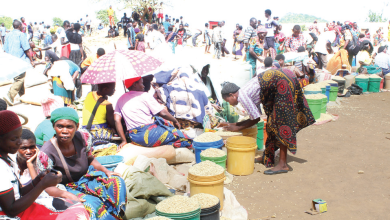
Agriculture is the lifeblood of Malawi’s predominantly rural economy and women farmers are redefining possibilities in the sector.
Esther Luhanga, 57, from Rumphi District, is among emerging farmers pushing the limits to overcome barriers that keep them in poverty.

Women like her are the main food producers for Africa, but most of them have little to show for their labour throughout the supply chain.
She has diversified her farming beyond tobacco to lift her families out of hunger and poverty.
Luhanga is a member of Nkhamanga Association which promotes sustainable farming practices for financial independence and food security.
The group is part of the Rumphi Innovation Productivity Centre (IPC) supported by National Smallholder Farmers’ Association of Malawi (Nasfam).
Luhanga now grows soya beans, groundnuts and maize as the growing backlash against the life-threatening impact of tobacco has made the leaf crop unattractive on the global market.
The crops provide food and income for her family, she says.
“Nasfam trained us in crop diversification several times and this has changed my life and farming approach,” says Luhanga.
Teamwork also guarantees the farmers access to affordable inputs, collective bargaining for profitable selling prices and high-yielding tips from extension officers.
They have partnered with FDH Bank Plc, which provides small loans in collaboration with Alliance One, a tobacco-buying company.
“We don’t struggle with transport anymore. They arrange vehicles to pick up our produce from home to the warehouses where it’s kept for sale,” says Luhanga.
Her hard work has paid off. She earns up to K15 million from tobacco alone.
So far, she has acquired a house roofed with corrugated iron sheets, a motorcycle, a car, an oxcart and three cows.
These assets, coupled with food security and a steady income, has left her family on the rise amid her husband’s chronic illness.
“I encourage fellow women not to depend solely on men. Nothing can stop them from achieving great things,” says Luhanga.
Women comprise about 70 percent of the country’s agricultural workforce, but UN Women estimates that they hold just about 17 percent of the land.
Luhanga backs the growing lobby for women‘s rights to own land.
“I own the land that I cultivate,” she says.
Like Luhanga, Mary Banda has taken to farming to sustain her family and transform their fortune following the death of her husband.
The widow produces tobacco and other crops, which generated about K10 million.
She has completed her house, purchased furniture, and invested in a motorcycle that shuttles travellers on rural roads at a fee.
The transport business brings home about K10 000 daily, totalling three times the country’s minimum monthly wage of K100 000.
“Through the association, we’ve learned climate-smart agricultural practices such as manure production and planting trees,” Banda says.
Nelly Kacheche, 50 of Mzimba South joined the IPC in 2021 when a field officer introduced her to its benefits.
She borrowed seed from a communal seed bank and paid back after harvesting. She co-founded a farmers’ club with her neighbours.
They are part of Nasfam initiatives, where they have learned to produce Bokashi manure from animal and crop waste.
She was among rural farmers who toured Nthawi Farm in Lilongwe, where she saw a young farmer exclusively applying organic manure for bumper harvests.
This inspired her to ditch costly chemical fertiliser which harms topsoil in the long run.
“This year, I plan to make 30 bags of Bokashi to restore soil fertility in my maize field,” she says.
Kacheche funds her daughter’s education at St. Luke’s College of Nursing in Zomba through proceeds from soya bean sales.
These stories reflect Malawian women’s tenacity and shift towards farming methods that guarantee them higher crop yields from their small fields despite climate change.
They are driving change within their communities and beyond.
Nasfam communications manager Karen Nyasulu says: “Our goal is to support farmers to become decision-makers in their own livelihoods.
“We recognise the vital role women play in transforming Malawi’s agricultural landscape.”
Through knowledge-sharing, skill development and unwavering determination, women are demonstrating how smallholder farmers can drive agricultural innovation and sustain their communities.
Their efforts are not only securing their families’ futures but also paving the way for a resilient, sustainable agricultural economy.